Physical Address
304 North Cardinal St.
Dorchester Center, MA 02124
Physical Address
304 North Cardinal St.
Dorchester Center, MA 02124


It’s a Thursday afternoon in New York and Pauline Lock has a problem.
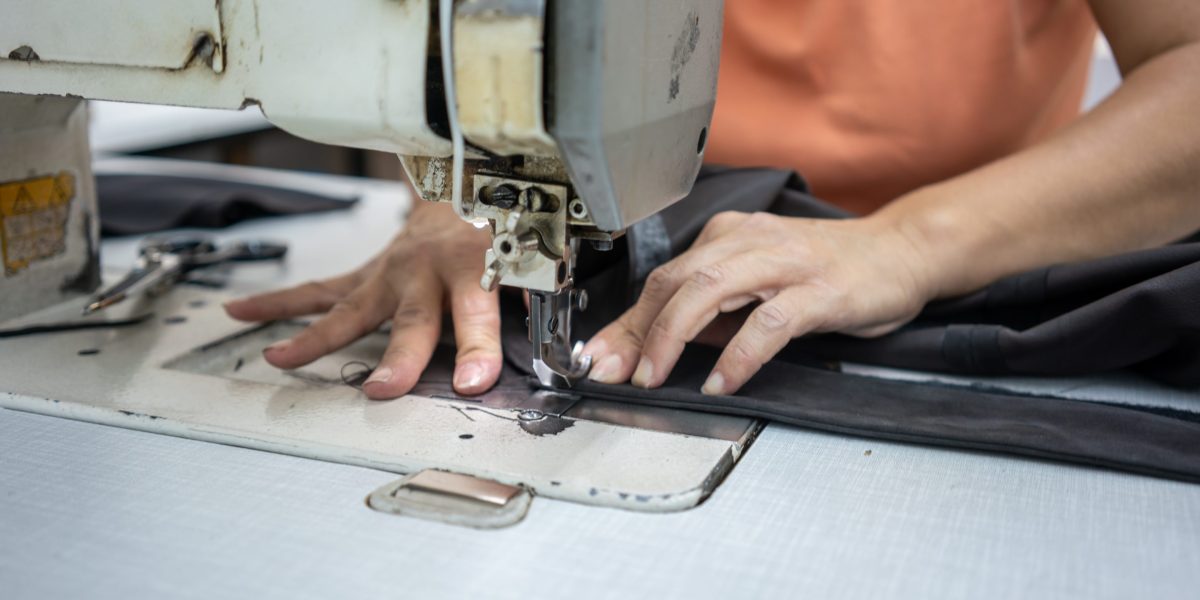
At the West 36 -Dressed Dress Factory, it stores hundreds of crispy cotton brushes, a seasonal season, which are almost completed, except for some critical details: the t -shirt buttons are stuck somewhere in China and the lock is not sure when they will arrive.
Lock manages Instyle USA, a 35 -year -old company that has created United States iconic clothing, including Calvin Klein, Donna Karan, Halston and Eileen Fisher. In recent decades, it has survived tectonic changes in the industry of the preparation of domestic clothing, as globalization brought fashion retailers to out -of -sea production in cheaper countries. But he has never faced a crisis like the one he is now, as he tries to navigate the Trump’s rates.
Lock says he applauds the spirit of the recent commercial policies of President Trump to return to the manufacture of the United States, even if it means that the North -Americans will pay more for their clothes. Only the “reciprocal” rates That President Donald Trump introduced imports earlier this month is creating headaches that are worse than what Instyle supported after the pandemic blockages, the Sandy hurricane’s shutdown or the 11/11 crash.
People think household factories need to be animated, says Fortune. But instead of responding to a hurry of desperate clothing labels to find homemade manufacturers, the latest trade policy changes have forced him to cut his staff by half and have created a “tornado” of repercussions. “In the 35 years we have been in the business, we have never had to climb that way,” he says.
“On a personal level, everyone is landed.”
Lock works precisely the type of domestic manufacturing business The tariffs are aimed at strengthening.
The company collaborates with domestic designers for a prototype and a pattern for their work, fountains of fabrics and finishes around the world and final craft products. It also makes private label clothes for retailers such as Macey. Today, only 2% to 3% Of the clothes that the North -Americans are made in the United States, with much of the fact for the military; Instyle is part of the tiny remains of an industry that occurred before.
For Instyle, the crisis began almost immediately after Trump’s so-called “Liberation Day” on April 2, when the President announced rates for dozens of countries and a leading rate to all incoming products, claiming that his strategy would rebuild American manufacture and force his counterparts to improve commercial terms for American exports. China was first hit with a 34%rate. Vietnam, India and Cambodia were threatened with 46%, 26%and 49%rates, respectively. Days later, after An increase in treasury produces And a drop in the securities market, Trump paused 90 days on rates for almost all countries, with the exception of China, for which a trade war for Tate has promoted tariff levels up to 145%. (China has imposed rates up to 125% on United States imports.)
But the three -month pause, the subsequent negotiations between the nations and the cut for Exceptions like computers and electronics They have done little to help smaller American companies already running on thin margins, strongly exposed to China and relying on a healthy consumer economy to survive. “Many things stopped,” says Lock. “The problem is uncertainty. It’s like ice walking, I’m not sure if you fall.”
Designers do not know how to plan future projects, because costs are unclear. Retails have stopped ordering because they do not trust consumers to continue to buy. (In the current environment, Lock says, people are not likely to choose new t -shirts and pants about food or rental payments.“They suddenly, clothing in the closet, ” they say, “ they don’t look too shallow. ” Retriers have also become more likely to play hard balls with wholesalers, for example, their customers, on the existing agreements. Later.
New rates have also caused bottlenecks At the US Customs Offices. He has stated that the customs staff is overwhelmed, keeping track of the changing rules constantly and maintaining the products they need, materials such as denim or silk or garnish and beautification, for longer, you do not know if the importer has paid enough homework.
For clothing manufacturers, purchases to source materials from countries with lower rates may not be paid: France and Italy do not face the same abrupt rates as China, but high -grade European tissues are at higher price before rates are applied.
In the meantime, it is difficult, if not impossible, to replace these supplies with merchandise of national origin because so few occur in the United States. It took years for fashion brands to move all supply chains and manufacturing plants, destroying the wide base of companies that once comprised a prosperity of the North -American clothing industry, according to Lock, but the transformation has been complete. Instyle now works at A niche market And it depends on the suppliers abroad of materials.
To drive the manufacture of clothing, Lock says: “We need to assure us that we have a solid base before cutting the rest of the world.”
Similar crises are Playing outside In small and medium -sized businesses in all the United States, unlike multinationals, these companies do not have cash reserves to absorb the costs of new rates. And even if they did, the constant changes in tariff policies and all the unknowns about what could happen later have discouraged companies to solve themselves in a strategy or great investment that can take them during this period. The United States Chamber of Commerce estimates that rates have already cost small businesses £ 24 billion Last month.
Lock says that if the circumstances do not change, Instyle and other clothing companies in their size could go out of the business within six months.
The lock cannot just choose a metaphor to describe in recent weeks. She says that the fall of the rates has been like a bubble or how to ride a roller coaster. He had to cut off the number of workers per hour in his factory for 20 to 10 years.
“We have invested so much, we are like a family here and we don’t want to see our family collapse,” he said.
He is exploring other options to bring work to the factory and is studying a temporary pivot for uniforms. Their competitors are holding the same conversations, according to her, asking -how they can survive.
Lock says he tries to stay positive and even has good news on Friday afternoon. Lastly for weeks in the customs, the buttons he needs to finish the shirts that occur in almost complete state have arrived and soon they will be sewn. The order must be wrapped and a truck on Monday, and at least this time, Instyle is not a success for SNAFU.
“People are understanding,” says Lock, “and we are grateful for that.”
This story originally presented to Fortune.com
